

What is industrial engineering design?
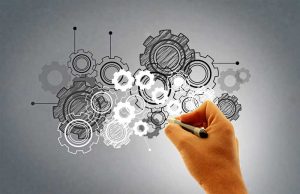
Industrial Engineering Design is a combination of the art of design and the science of engineering, aimed at creating products, systems, or processes that are optimized in terms of performance, aesthetics, safety, efficiency, and cost. Unlike purely graphic or artistic design, industrial engineering design is based on scientific analysis, precise calculations, and a comprehensive understanding of material behavior and manufacturing processes.
Key Elements of Industrial Engineering Design:
1.Needs Analysis: Assessing the functional and operational requirements of the system or product, while considering market demands.
2.Modeling and Simulation: Using CAD, FEM, and CFD software for 3D modeling and analyzing the behavior of components under various conditions.
3.Material Selection: Evaluating material properties to ensure suitable mechanical, thermal, or chemical performance.
4.Design Optimization: Applying methods such as sensitivity analysis, parametric optimization, and evolutionary algorithms to achieve the best possible design.
5.Manufacturability: Ensuring the design can be produced using existing methods (machining, casting, 3D printing, etc..)
6.Design for Sustainability: Considering the product life cycle, recyclability, energy consumption, and pollution reduction.
7.Documentation and Testing: Preparing technical drawings and documents, building prototypes, and conducting operational and quality tests.
Industrial engineering design lies at the heart of product development and innovation across various industries. From designing a small component in a medical device to complex systems in aerospace and automotive industries, all fall under this interdisciplinary field.
In recent years, industrial design and engineering have seen significant advancements that have profoundly influenced the manufacturing and production processes of industrial components. This article provides a comprehensive look into these innovations, challenges, and future trends in the field.
1.Additive Manufacturing and 3D Printing
Additive manufacturing, also known as 3D printing, has enabled the production of components with complex geometries. This technology has found widespread application in industries such as aerospace and healthcare, contributing to waste reduction and increased product customization. For instance, the company Alloyed utilizes this technology to produce high-performance metal parts for various industries.
2.Artificial Intelligence and Machine Learning in Industrial Design
The integration of Artificial Intelligence (AI) and Machine Learning (ML) in industrial design has significantly enhanced design processes. These technologies analyze large datasets to optimize designs and predict product performance. Studies have shown that the use of AI in design can lead to the development of innovative and efficient solutions.
3.Advanced Materials and Manufacturing Techniques
The development of advanced materials such as carbon fiber composites and smart alloys has opened up new possibilities in the design and manufacturing of industrial components. These materials, with their unique properties, contribute to improved product performance and durability. Additionally, advanced manufacturing techniques like laser cutting and CNC machining have enhanced precision and efficiency in production.
4.Sustainable and Eco-Friendly Design
With growing environmental concerns, sustainable design has become a key priority in industrial engineering. This involves the use of recycled materials, reduction of energy consumption, and optimization of manufacturing processes to minimize waste. For example, the Hirekin Center at Mondragon University focuses on developing sustainable industrial processes and reducing environmental impact.
5.Modular and Flexible Design
Modular design approaches, which involve the creation of interchangeable and upgradeable components, offer greater flexibility and customization. This type of design not only simplifies maintenance and repair but also allows for rapid adaptation to changing market demands.
6.Challenges in Implementing Innovations
Despite their numerous advantages, implementing these innovations comes with challenges. High costs, the need for workforce training, and infrastructure adjustments are among the main obstacles. Additionally, issues related to sustainability and the environmental impact of certain technologies require careful evaluation.
7.Future Trends in Industrial Design and Engineering
It is anticipated that in the future, the deeper integration of artificial intelligence and machine learning in design and production processes, the development of smart materials, and a stronger emphasis on sustainable design will play a vital role in the advancement of industrial engineering. Moreover, the use of Augmented Reality (AR) in design and manufacturing processes may further enhance efficiency and precision.
Overall, recent innovations in industrial design and engineering have created unprecedented opportunities to improve manufacturing processes and product development. However, to fully capitalize on these opportunities, investment in education, research and development, and the establishment of appropriate infrastructure is essential.


0 Comment